The other day I helped a family with their annual passata tradition. I had an ulterior motive: making passata has been on my bucket list for years, and I wanted to learn how they did it.
While we were working, I remembered seeing a Facebook reel about the “Nonno Knife” and thinking it was amusing.
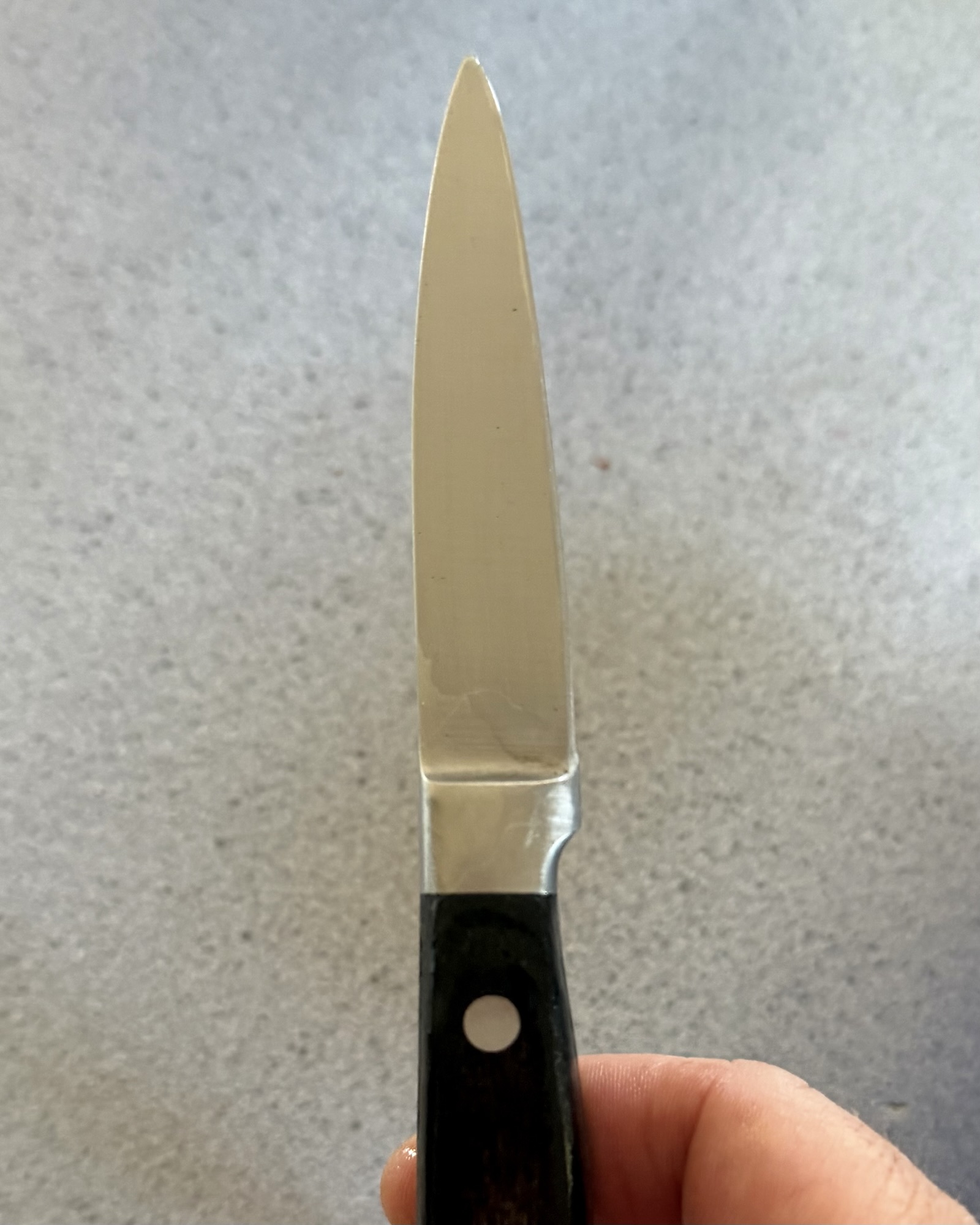
Why are you telling me this, Papa? Well, the Nonno in this operation used a cheap supermarket paring knife.
What do you know? It looks like the reel was true! He was literally using a “Nonno knife.”
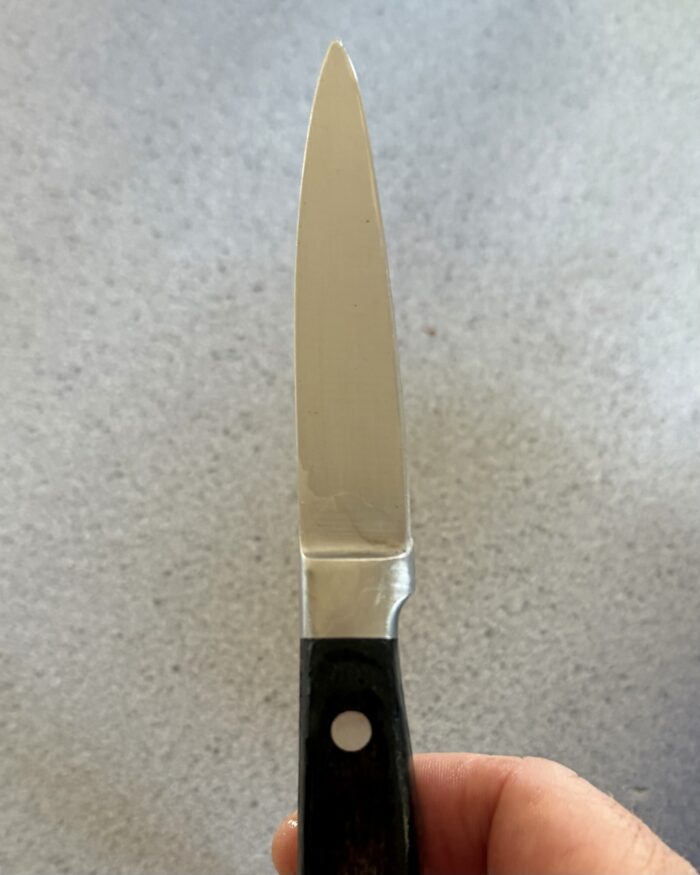
So I get home, and guess what? Despite owning a roll of stupidly expensive professional knives (including a $100 paring knife, but NOT a Japanese knife, at least)—the knife I’ve used for most tasks over the last 25+ years is a cheap one I got for free from a kitchen renovation.
Somehow, after all these years, I have a Nonno knife.
But since I’m not a Nonno (yet), let’s just call it “Papa’s Knife.”
While reading (yet another) discussion this week about whether food photos are “real,” I decided it would be way more entertaining to scroll through old Facebook albums.
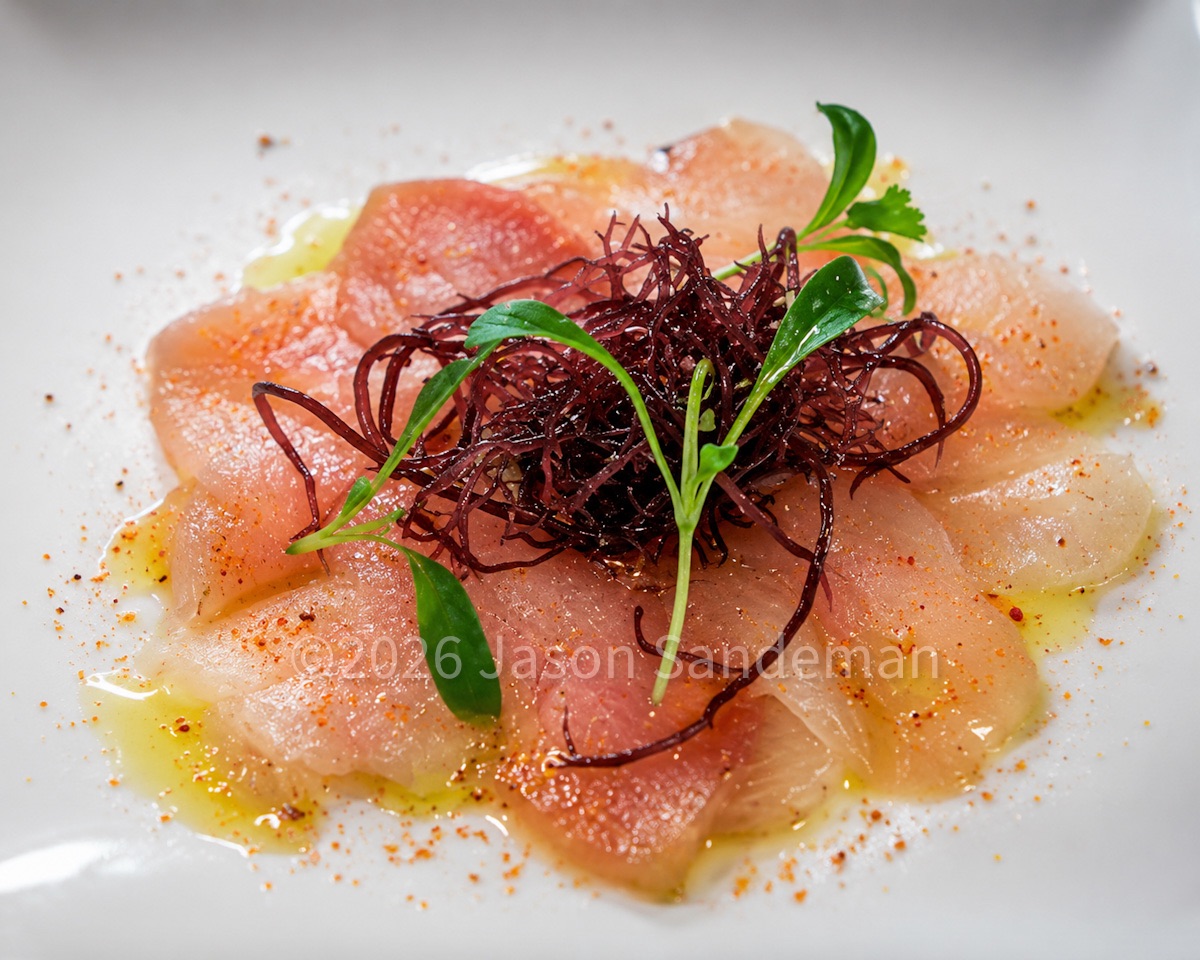
That’s when I found this dish from 2009.
If you think you know what you’re looking at, you’re probably wrong. Keep scrolling.
Looking at this particular photo brought back a memory I hadn’t thought about in years…
At the time, I was running my first kitchen as an Executive Sous Chef, effectively acting as Chef de Cuisine under my mentor, the chef who became the Food & Beverage Director.
Looking back now, I also laugh a little.
My mentor and I prepared this dish for a food photography session, and everything had to be perfect.
Of course there were microgreens. (It was 2009.)
While we were executing, he turns to me and asks me why I don’t have a nice Japanese knife like all the other cooks. (it would be easier to sashimi the Albacore.)
Back then, Japanese knives were becoming the thing every cook bought. I remember commenting that I was taught those knives were something you had to earn. Those assholes buy these knifes but can’t even keep them sharp. What a waste of money.
Without hesitation, my mentor turned to me, hands me a Japanese knife, and said:
“Out of everyone in this kitchen, you’re the one who deserves that knife.”
I don’t remember what knife he handed me, or what brand it was.
I don’t care—I remember how that moment felt.
Yeah—the dish was styled. The photos were styled. The restaurant itself was styled. That’s part of hospitality. People don’t just pay for food. They pay for an experience.
A rule I stubbornly defended: the photo still had to resemble the dish. The guest had to recognize what landed on their table. The goal was never to invent something that wasn’t there — it was to present what was there, at its best.
Funny enough, that’s what made me think about this dish again.
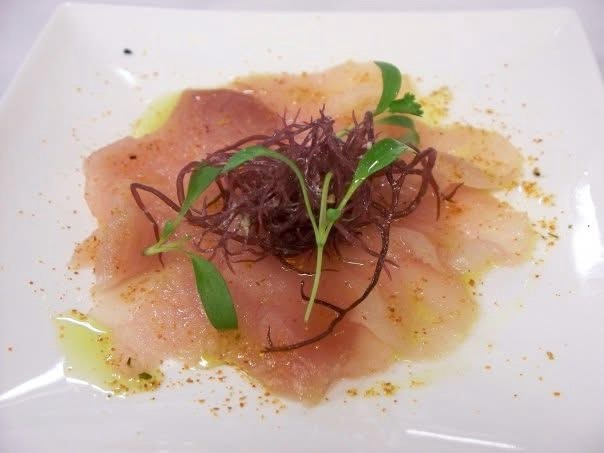
The featured image for this post isn’t the original photo. I quickly snapped the photo on my BlackBerry Bold before the plate left the kitchen.
That BlackBerry gleefully flattened everything — the fish, the colour, the oil, the texture, all turned into the same orange-grey mush. The dish looked better than the camera could handle.
Modern tools let me restore some of that. Not because the tool is magic — anyone can open the same app. But seventeen years of knowing what that dish was supposed to look like is what told me how far to push it, and where to stop.
It wasn’t the garnish, or the photography, or even the food that stuck with me. It was the kitchen. The mentor. The curiosity that came with both.
Same knife. In skilled hands.
Funny how a seventeen-year-old photo can remind you of the things that actually mattered.
The original. Taken on a phone that also doubled as a flashlight.
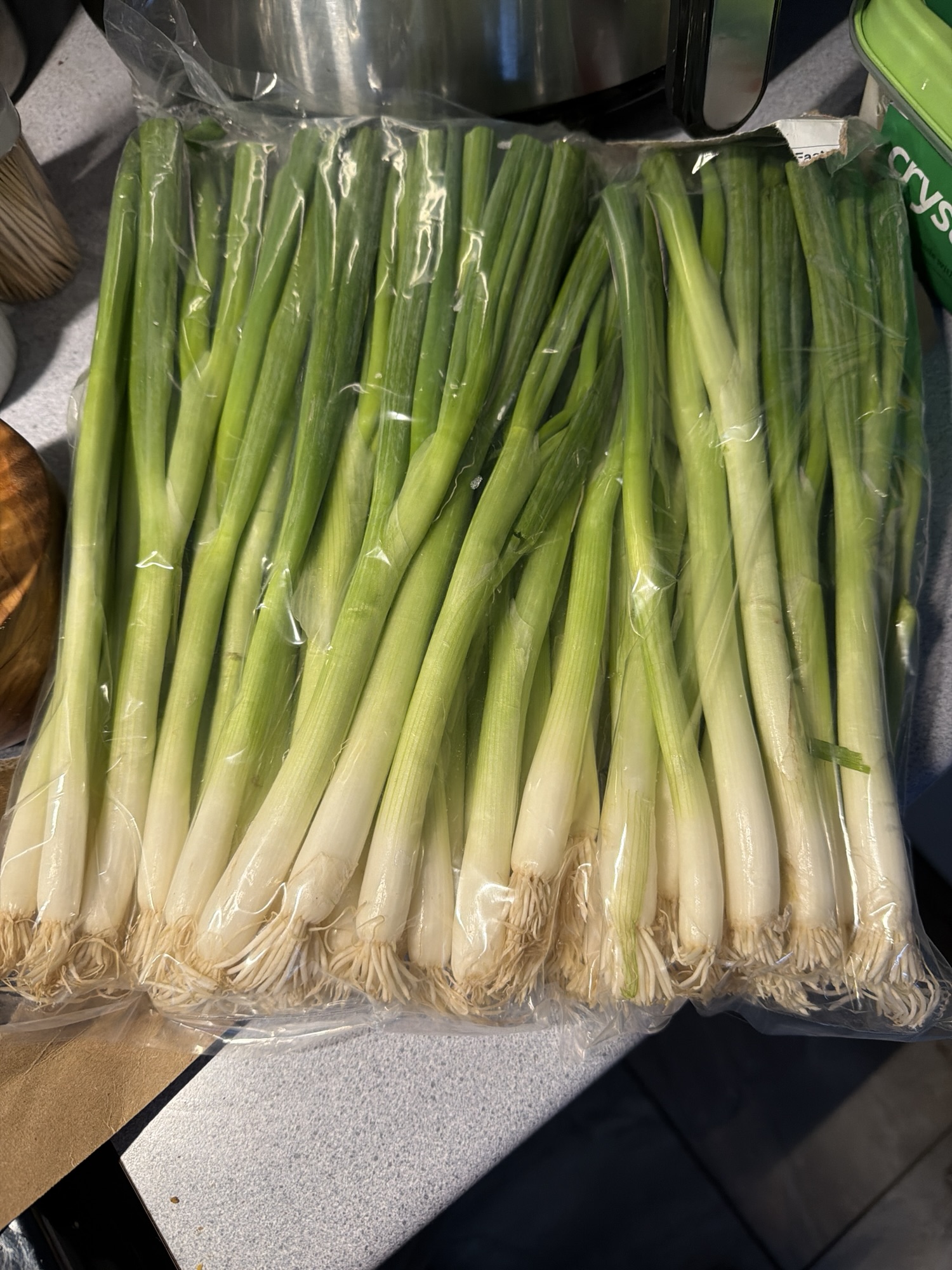
Look, I’ve bought these before and I’ll buy them again. 24 green onions for $6.99 is a better deal than 3 for 99 cents — you don’t need a Red Seal to do that math.
The problem? I have a history with green onions. Specifically, a history of turning them into fridge slime before I get any real use out of them.
So here’s what happened this time.
I get home from Costco. These things sat on the counter for six hours while I put groceries away, butchered a pork loin, cooked supper, and played Tetris with the fridge. No room. Green onions lose.
I managed to use some in a “vegan” kimchi Jjigae ramen. Chopped enough for a small container. That’s 2 out of 24.
The rest? Spent the night on the counter. In the bag. Same bag they came home in. Same bag Costco had refrigerated before I bought them.
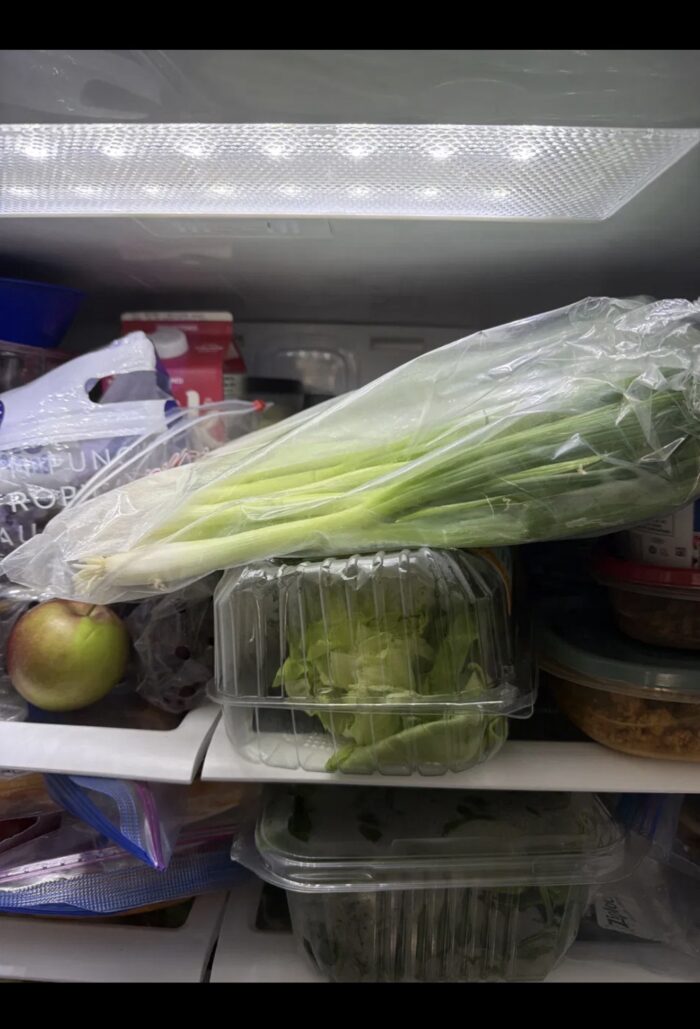
They’rea in the fridge now. Finally. But the clock is ticking and I’ve got 22 green onions staring at me every time I open the door.
Ever wonder—So what the hell do I do with these before they go sideways?
My heart is pounding when I open the door and walk into the office. My sous chef is sitting behind his desk.
He points to the chair, and says, “Sit.”
He doesn’t raise his voice right away.
“Tell me why you put whole peppercorns in the marinade.”
Just looks at me.
I’m explaining. Confident. Logical. Already halfway through justifying it.
I strained the peppercorns. No big deal. Chicken tastes better this way.
I think I’m being smart.
He cuts me off.
“Shut the fuck up.”
And just like that, I realize I’m not being smart.
Because I’m thinking about the one time I do it right.
I’m not thinking about the system.
The one time someone forgets to strain the peppercorns. The one guest who bites down on that peppercorn. The one mistake that doesn’t get a second chance.
I knew what to do.
I just didn’t understand why it had to be done that way.
I’m being dangerous.
And that’s the difference.
Knowing how something works isn’t the same as knowing how to use it.
I could execute—but I didn’t understand the system, so I got it wrong.
That’s knowledge you earn through experience.
That’s apprenticeship.
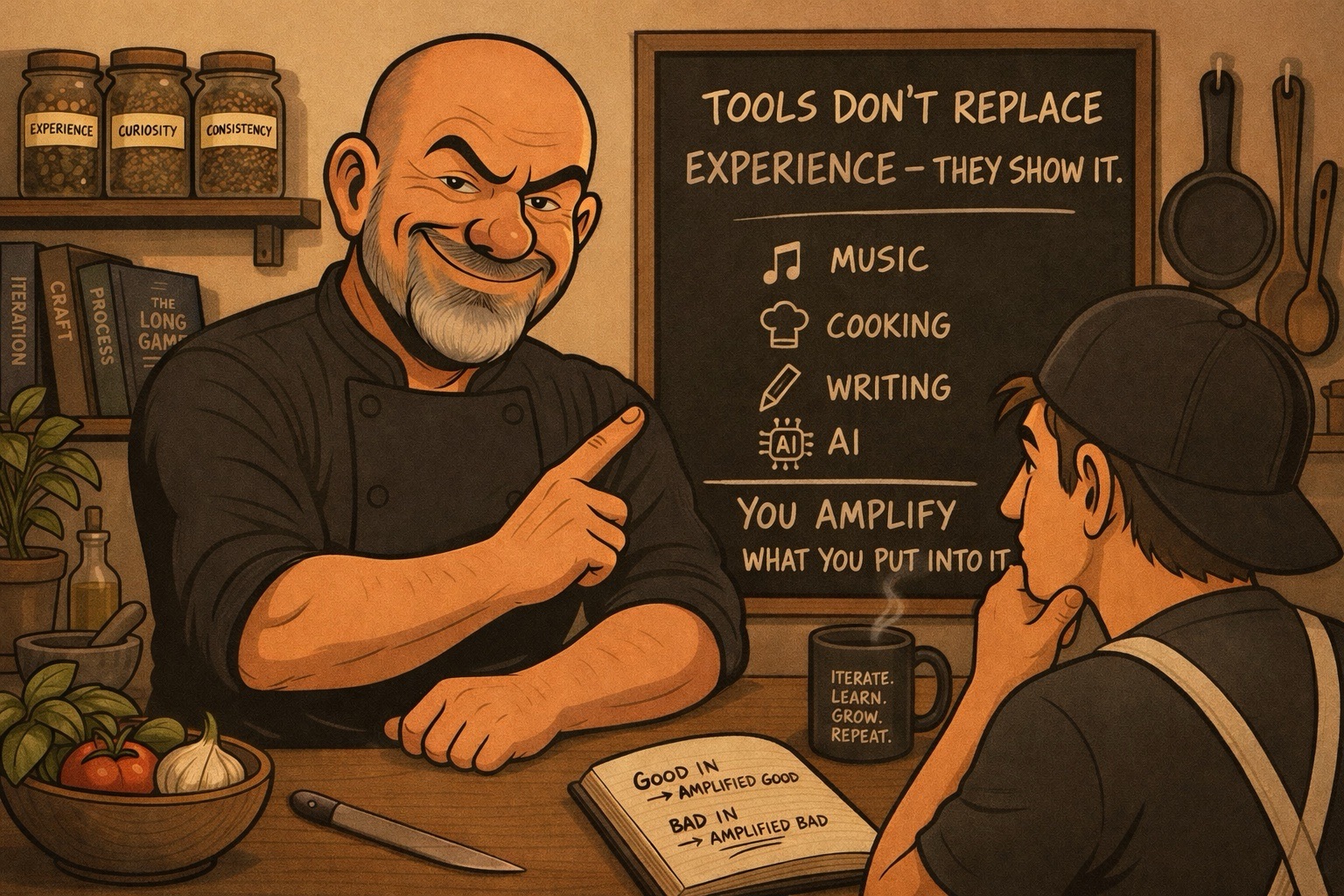
That’s why I’m not apprehensive about AI.
I’m proof that knowing how something is done doesn’t mean you know how to do it properly.
That part is earned.
AI doesn’t replace skill.
It reveals it.
You can have the recipe and still ruin the dish. Or someone’s teeth. Or your own.
You can skip the apprenticeship, but your tools won’t hide it.